









Can I take classes offered by other Schools or Colleges?
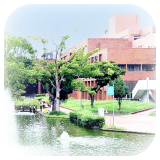
Yes, you can take them as long as your schedule permits. However, some subjects may have restrictions regarding eligible Schools, Colleges, or year levels. Please note that the University of Tsukuba has a vast campus—equivalent to the size of 55 Tokyo Domes—so you should be careful as traveling between classrooms can be time-consuming.
Could you explain the credit system?
Credits are the standard units used to measure the amount of learning required to complete a subject. Each subject offered at the university is assigned a specific number of credits. To earn these credits, you must complete the required study hours and pass examinations or other assessment methods. Eligibility for graduation is determined based on the total number of credits earned. The credits required for graduation are: 200 credits over 6 years for the College of Medicine; 124 credits over 4 years for the College of Nursing (129 for the Public Health Nurse Course); and 124 credits over 4 years for the College of Medical Sciences. The curriculum is designed to allow students to earn these credits comfortably within the standard period of study.
What is the "Care Colloquium"?
This is a signature course that takes full advantage of our university's strengths as a comprehensive institution. It is open not only to students from the three Colleges of the School of Medicine and Health Sciences, but also to those from other Colleges, such as the College of Disability Sciences (School of Human Sciences), who study medical and welfare-related subjects. Through group discussions on actual case scenarios involving students from diverse majors, participants can learn about team-based healthcare from a broad perspective.
Is it possible to participate in club activities or have part-time jobs?
Club activities offer valuable experiences that cannot be gained through lectures alone. There are various cultural and sports clubs at both the university-wide and medical-school levels, and many students successfully balance their club activities with their academic studies. Many students are also actively involved in part-time jobs and local community volunteer activities.

FAQ : College of Medicine
Could you tell me about the unique educational policies and facilities of the College of Medicine?
Our goal is to cultivate the future leaders of Japan who will play active roles at the forefront of clinical medicine, medical research, and healthcare administration. We aim to train clinicians who can identify problems and think scientifically while empathizing with patients, researchers who elucidate disease mechanisms to provide feedback to clinical practice, and physicians who contribute to social medicine. The curriculum is characterized by its focus on PBL (Problem-Based Learning) Tutorials and Clinical Clerkships. PBL Tutorials involve small-group learning where students discuss, research, and solve clinical cases through collaborative inquiry.
The PCME (Pre-clinical and Clinical Medical Education) office is a unique department that oversees and scientifically advances medical education. Our facilities are regularly updated to enhance educational effectiveness, and we take pride in maintaining them at the highest level in Japan.
I am interested in research. Can I get involved in medical research during my undergraduate years?
Shortly after admission, laboratory visits are organized, providing opportunities to see firsthand the research environments of faculty members active in various medical fields. Students interested in research can choose "Laboratory Exercise" (Kenkyushitsu Enshu) from their second year onwards. This allows them to participate in cutting-edge medical research in a lab of their interest, receiving guidance from faculty after classes or during long vacations.
Furthermore, from the latter half of the fifth year, students can opt for the "New Medical Science Major," a track specifically designed to train future medical researchers and bridge the gap to their subsequent careers. Some students have even successfully compiled their research findings into published academic papers.


FAQ : College of Nursing
Specifically, what do students study in the College of Nursing?
You will gain a broad range of knowledge essential for nursing, including human anatomy and physiology, pathology, theories and methods for understanding psychology in various situations, and core nursing sciences. You will also engage in practical training at medical, health, and welfare facilities.
Furthermore, since general education is vital for professionals, you can take advantage of our comprehensive university environment to study subjects across various fields.
What makes the College of Nursing at Tsukuba unique compared to other universities?
Our college aims to establish nursing science based on scientific evidence. A unique feature is the absence of a rigid "chair system" (Kouza-sei), allowing each faculty member to engage in diverse and creative research and education. This allows students to learn from a broad perspective without being limited to a specific nursing theory. We also emphasize group work to foster proactive learning abilities and offer advanced graduate programs to further promote high-level academic expertise.
Please tell me about the qualifications I can obtain.
Graduates are eligible to take the national examinations for Nurses and Public Health Nurses. Additionally, by completing designated subjects, you can obtain a Type I School Nurse Teacher License. A Type II School Nurse Teacher License can also be granted upon application after passing the National Public Health Nurse Exam. Please note that the School Nurse and Public Health Nurse courses are elective (selection-based) and have limited capacity.
Could you provide details about the practical training (clerkships)?
We offer "Clinical Practice" at the University Hospital and various external facilities. Starting with Basic Nursing Practice in the 2nd year, the training increases in quality and quantity through specialized fields in the 3rd and 4th years.
Specialized fields: Adult, Maternal, Pediatric, Psychiatric, Community, and Gerontological Nursing. In the 4th year, students can further deepen their expertise through "Integrated Practice" by selecting a field of interest.


FAQ: College of Medical Science
What is the difference between the Major in Medical Sciences and the Major in International Medical Sciences?
The Major in Medical Sciences cultivates professionals such as clinical laboratory technologists and researchers for R&D in medical diagnostic industries. It provides education focused on specialized knowledge, technical skills, and clinical teamwork abilities centered around diagnostic technologies.
The Major in International Medical Sciences develops talent capable of contributing globally within international corporations and research institutes. Students learn alongside international peers through English-language lectures and practicals, fostering expertise and problem-solving skills in a globalized daily environment.
Please tell me about the Graduation Research (Thesis).
Students conduct research in their 4th year (3rd and 4th years for the International Major), choosing a theme from over 50 medical research groups. Before the fall semester of the 4th year, a research presentation is held, and the findings are compiled into a collection of graduation theses.
What kind of research can I do if I proceed to Graduate School?
In the Master's Program in Medical Sciences (Frontier Medical Sciences), research is categorized into Medical Sciences, Medical Physics, and Translational/Regulatory Science. Each course includes numerous laboratories where students receive personalized guidance in their field of interest, leading to presentations and thesis publication.
We provide meticulous guidance throughout the entire process, leading up to the final research presentation and thesis preparation.
Upon completion of the Master's Program in Medical Sciences, graduates can choose to embark on professional careers or pursue further advanced research in a doctoral program.


