







CLINICAL
MEDICINE
Department of Clinical Medicine
In the field of Clinical Medicine, numerous faculty members form various research groups dedicated to elucidating the causes, pathogenesis, and mechanisms of diverse diseases, with the goal of establishing advanced methods for diagnosis, treatment, and prevention.
Cutting-edge Clinical Research
In the field of Clinical Medicine, we conduct advanced clinical research by integrating technologies that have made dramatic progress in recent years.
Methods such as molecular pathological analysis and genetic analysis are widely adopted not only in research but also in routine testing, contributing to the provision of personalized medicine (tailor-made medicine) optimized for each patient's condition.
Furthermore, research outcomes using high-tech equipment—including new imaging technologies like 3D-CT, catheter ablation for arrhythmia, endoscopic and robot-assisted surgery, and cancer genomic medicine—are already being applied in clinical settings.
We also actively tackle intractable diseases such as cancer, AIDS, genetic disorders, and autoimmune diseases, developing new therapies in fields like organ transplantation, cell therapy, gene therapy, and regenerative medicine.
Moreover, we lead the world as pioneers in Proton Beam Therapy, an area of focus since our university's founding, and Boron Neutron Capture Therapy (BNCT) for brain tumors, which was developed more recently.
In September 2019, the University Hospital was designated as a Core Hospital for Cancer Genomic Medicine and established a Cancer Genomics Outpatient Clinic.
In addition to cancer, we focus on highly original research into various lifestyle-related diseases, aiming to bridge the gap between pathological mechanism elucidation and prevention/treatment.

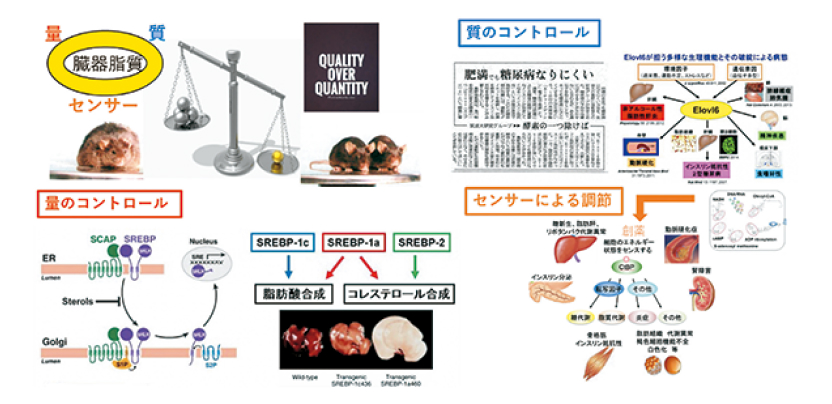
Figure: A New Concept of Lifestyle Diseases — Quantity and Quality of Lipids
Through our unique research on lipid metabolism, we aim to elucidate the mechanisms of obesity, diabetes, hyperlipidemia, arteriosclerosis, and dementia, and to develop novel therapies.
We have discovered genetic transcription factors that regulate the quantity of lipids in organs and cells, enzymes that control the quality of fatty acids, and sensors that detect nutritional status.
By uncovering how these factors control energy metabolism and their connection to lifestyle diseases, we strive to bridge these findings to innovative medical treatments. New biology lies beneath the surface.
Department of Endocrinology, Metabolism and Diabetes

Global Reach: The Tsukuba Research Network
Since its founding, the university has abolished the traditional "medical chair system," historically enabling diverse collaborative research that transcends academic boundaries.
Sports medicine research, integrated with physical education and health sciences, is a unique strength of our university—the only one in Japan to host both disciplines.
Interdisciplinary research with a global perspective is flourishing in fields such as space medicine, environmental medicine, and international medical cooperation.
The Hub for Advanced Medical Care: University of Tsukuba Hospital
Faculty members supporting our research also engage in clinical practice, educating students and residents while striving to contribute to community medicine and the advancement of highly advanced medical care.
Led by the "Tsukuba Clinical Research & Development Organization (T-CReDO)," we are dedicated to translational research, which bridges laboratory findings to the clinical setting more rapidly and efficiently.
Tsukuba Clinical Research & Development Organization (T-CReDO)
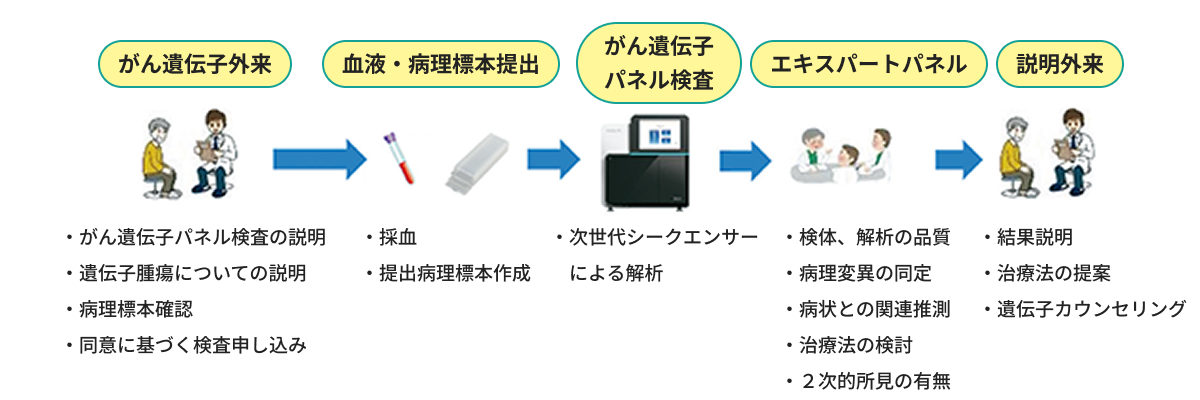
Figure: Flow of Cancer Genomic Medicine at the University of Tsukuba Hospital
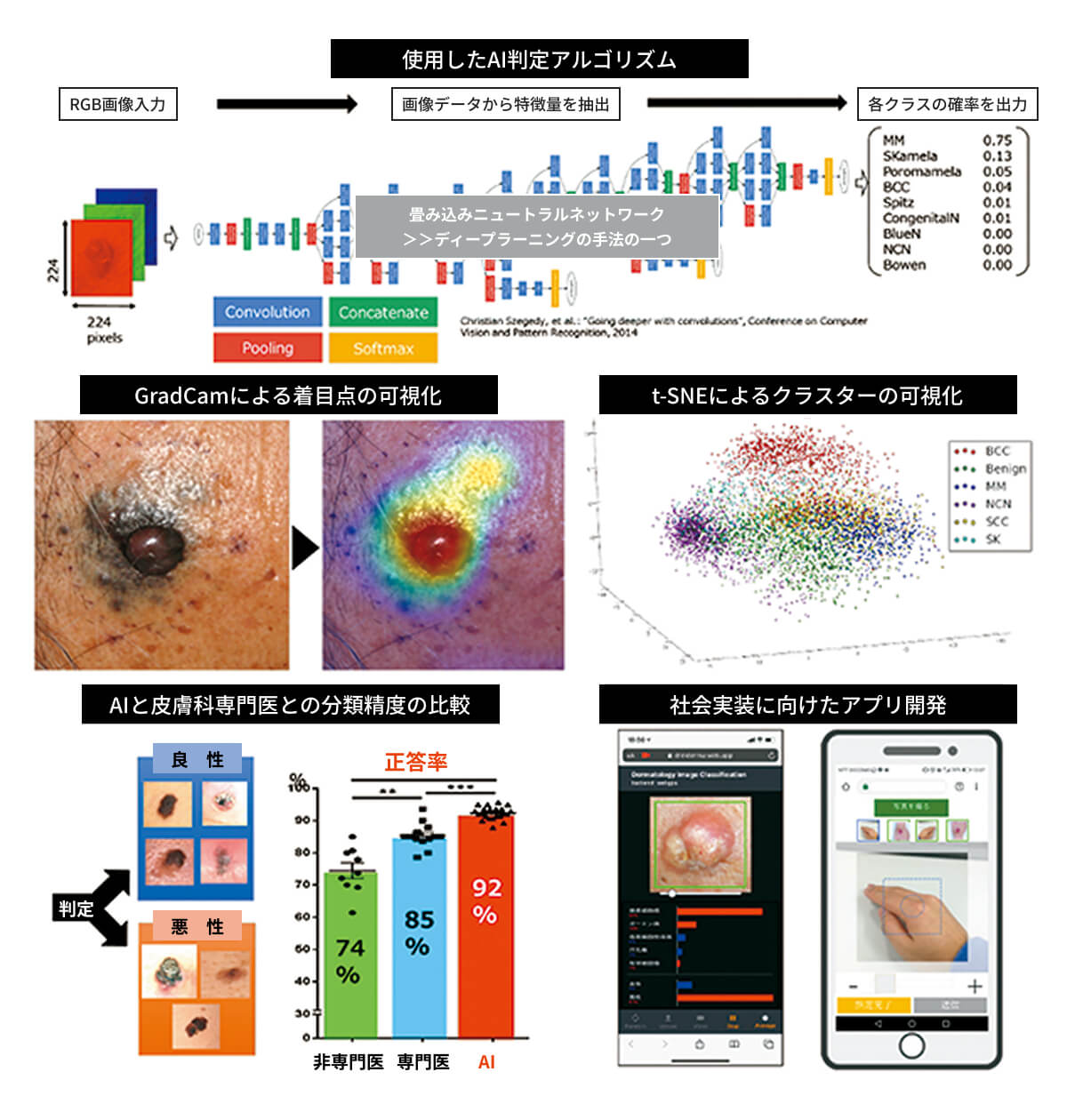
Figure: AI-based Diagnostic System for Skin Tumors via Image Analysis
Since 2016, the Dermatology Group has been researching an AI diagnostic system for skin tumors using Convolutional Neural Networks (CNNs).
We are currently developing a mobile application utilizing this AI classifier and working towards its practical implementation in society.
The classifier was built by training the CNN-based AI with approximately 6,500 stored images of skin tumors.
Technologies to visualize which parts of the image the AI focuses on have recently emerged, such as Grad-CAM and t-SNE (shown in the figure).
Test results revealed that the AI could classify skin tumors more accurately than board-certified dermatologists.
Social Medicine is a field of research primarily focused on society and human populations.
By addressing diverse themes such as disease prevention, health management, environmental issues, and health policy, we contribute to global health by giving research findings back to society.
The extensive scope and depth of our social medicine research is a hallmark of the University of Tsukuba.
Nursing Science is characterized by a broad scope of research, ranging from specialized nursing techniques to health issues faced by all people, from fetuses and children to the elderly. Research outcomes are applied in clinical settings and utilized to maintain and promote the health and well-being of individuals.
Health Services Research
We comprehensively and scientifically evaluate the quality of healthcare services (including health, nursing, and welfare) through the lenses of Structure (Input), Process, and Outcome.
Our findings are analyzed from interdisciplinary perspectives—including policy science, law, economics, sociology, and anthropology—and shared with both domestic and international audiences.
By viewing medical, long-term, and welfare care as a continuous spectrum of services, we aim to promote high-quality care that harmonizes with people’s daily lives, based on empirical data.
In recent years, by utilizing big data from medical and long-term care, we have reported research findings on caregiving burden, palliative care, regional medicine, and cost evaluations.
We have signed a Memorandum of Understanding (MOU) with Tsukuba City regarding data analysis, working to apply our research results to the city's efficient medical and long-term care policies.
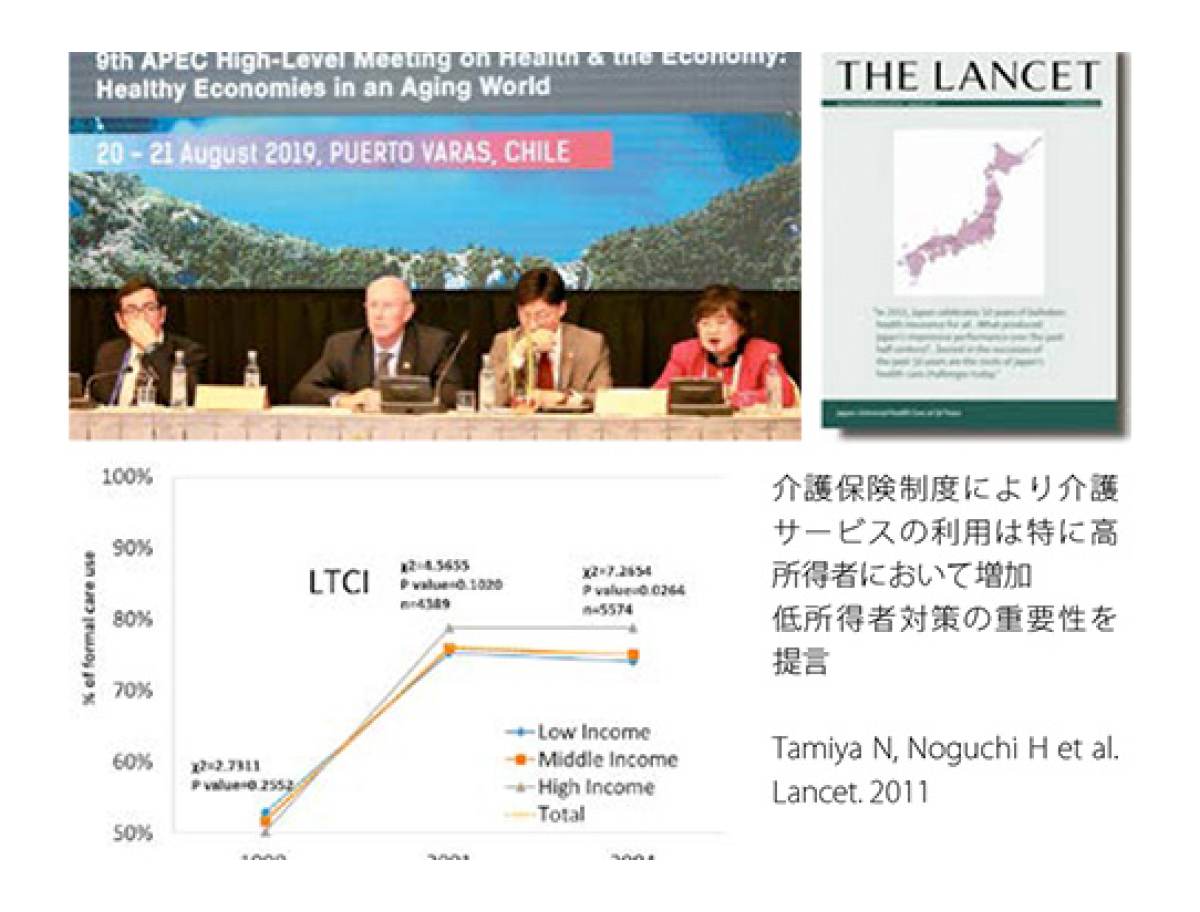
Analysis and Evaluation of Health Data
We utilize statistics and Information Technology (IT) to investigate the causes of diseases and contribute to health promotion and disease prevention.
International Collaborative Research: Toward an Aging Society
To ensure a healthy and long-lived future for the Japanese people, we conduct comprehensive preventive research by identifying the societal causes of lifestyle-related and geriatric diseases.
Protecting Human Rights and Safety: Forensic Medicine
We elucidate causes of death through pathological and toxicological methods. Our development of DNA typing and toxicological assays supports criminal investigations and contributes to public safety.
Mental Health and Society
We scientifically clarify the causes of phenomena such as abuse, addiction, suicide, and crime, developing methods for their prevention and treatment.
Addressing Global Environmental Issues
We study diseases caused by chronic arsenic exposure and PM2.5 at a molecular level, and conduct collaborative research with the WHO on the disease burden caused by global warming.
